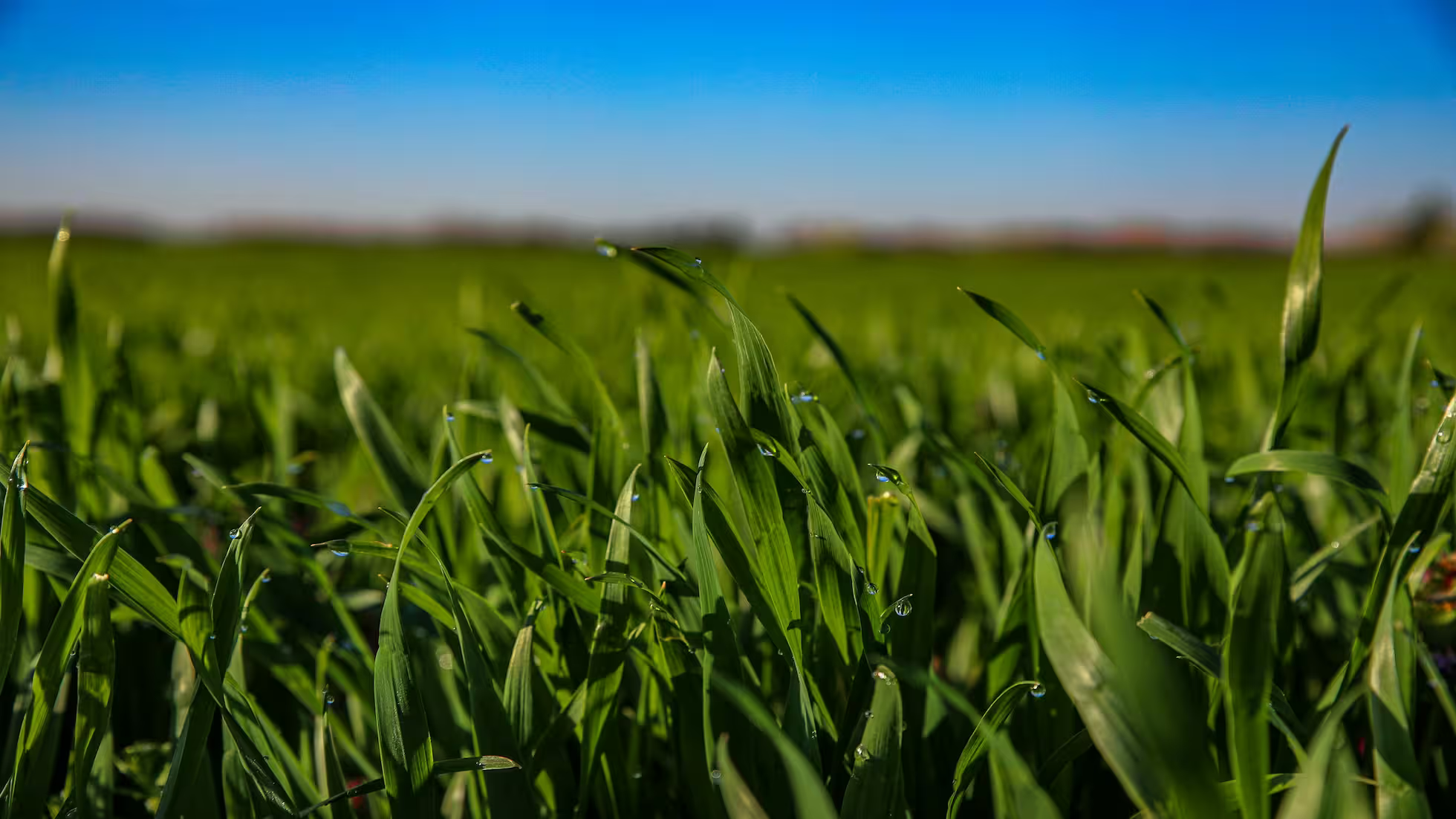
Scientific and effective planting and management measures enable winter wheat to overwinter safely and achieve stable, high yields, building a strong foundation for food security in the coming year.
1. Improve Sowing Quality and Management
(1) Fine land preparation
Land preparation is the first step and directly affects emergence and growth. Choose methods based on soil type, previous crop, and climate. After harvest, shred and handle residues promptly, keeping straw length ≤ 5 cm to facilitate tillage. Deep tillage breaks the plow pan and improves porosity and aeration; keep depth ≥ 25 cm and perform deep tillage every 2–3 years to improve structure and the soil’s water–nutrient capacity.
(2) Variety selection and use
Choose varieties by local climate, soil fertility, pest/disease pressure, and market demand. In arid areas, select drought‑tolerant varieties; in rainy or waterlogged areas, select lodging‑tolerant, moisture‑tolerant ones. Introduce, test, and promote new varieties to optimize structure, enhance stress tolerance, and raise yield potential, relying on regional trials and demos.
(3) Seed treatment
Treat seed to reduce pests and diseases during growth. Choose dressings by target pests/diseases, climate, and varietal resistance. Film‑coating or slurry dressing both improve germination and vigor. In mixed‑pressure areas, use compound formulations for “one dressing, multi‑control”. Sow soon after dressing to ensure efficacy and reduce environmental residues.
(4) Moisture‑fit sowing strategy
Match soil moisture and depth to secure emergence. Irrigate to create moisture where dry; drain excess water where too wet to avoid rot or skips. Choose no‑till, narrow‑row, or wide‑band uniform sowing as suited to the soil to optimize early growth.
(5) Timely sowing
Timing underpins safe overwintering and high yield. Consider growth habit, local temperatures and thermal time. Winter/semi‑winter types generally require effective accumulated temperature of 550–650°C before winter; spring types 500–550°C. Too early leads to rank growth; too late hurts overwintering. Arrange timing so wheat has enough cold tolerance pre‑winter.
(6) Fertility and nutrition
Fertilization depends on soil, yield target, and climate. Base N‑P‑K on soil tests and a scientific plan. As a guide, high‑yield fields apply 14–16 kg N/mu (pure N); adjust P and K per soil status and crop need. Balance basal and topdressings for sustained supply; avoid excesses or deficiencies.
(7) Irrigation and drainage
Water is critical, especially at seedling and overwintering stages. In dry Huang‑Huai and North China, irrigate around sowing to ensure emergence and overwintering. In rain‑prone Middle–Lower Yangtze and Southwest, open drains promptly after sowing to increase capacity and prevent waterlogging stress. Tie decisions to forecasts and adapt flexibly.
(8) Timely rolling and soil management
Rolling improves uniform emergence by firming seed–soil contact, promoting roots, and reducing evaporation. Roll after sowing when moisture is suitable, especially with straw return, to prevent floating residues that hinder emergence. In paddy stubble areas with wet soil, delay rolling until conditions fit.
2. Post‑sowing Management and Overwintering
(1) Check and fill gaps; balance density
Inspect stands after emergence. Re‑sow gaps and breaks early so replacements synchronize with the main stand. Use soaked‑pre‑germinated seed or transplanting as appropriate; thin overly dense patches to optimize space and resource use.
(2) Pre‑winter herbicide and weed control
Apply herbicides around the 3‑leaf stage pre‑winter when weeds are even and small; a single pass typically controls the full season. Match products to weed spectra and follow safe‑use principles; avoid cold‑surge windows and prefer “cold tail, warm head” periods for efficacy and crop safety.
(3) Topdressing to strengthen growth
Topdress by stand status to keep nutrition adequate and balanced. If basal was insufficient, apply quick‑acting N around 2‑leaf to boost early growth. Where large straw return consumes soil N, supplement in time to avoid transient N deficiency. Adjust timing and rates to weather and stand to avoid over‑ or under‑vigorous growth.
(4) Disaster prevention and overwintering security
Low temperature, frost, and drought threaten winter wheat. Prepare plans with forecasts and take timely measures. Before cold snaps, roll and/or irrigate to conserve moisture and resist freezing; where cracking is severe, harrow or roll to reduce freeze injury risk. In overly rank stands, curb water and N and roll moderately pre‑winter to steady growth and enhance hardiness. Strengthen disease and pest control—e.g., against eyespot and Rhizoctonia crown rot—by using resistant varieties, seed dressing before sowing, and timely sprays during growth.
With the above measures, producers across diverse climates and soils can ensure safe overwintering and stable, high yields of winter wheat, buttressing next year’s food security.
Published at: Oct 8, 2024 · Modified at: Feb 6, 2026