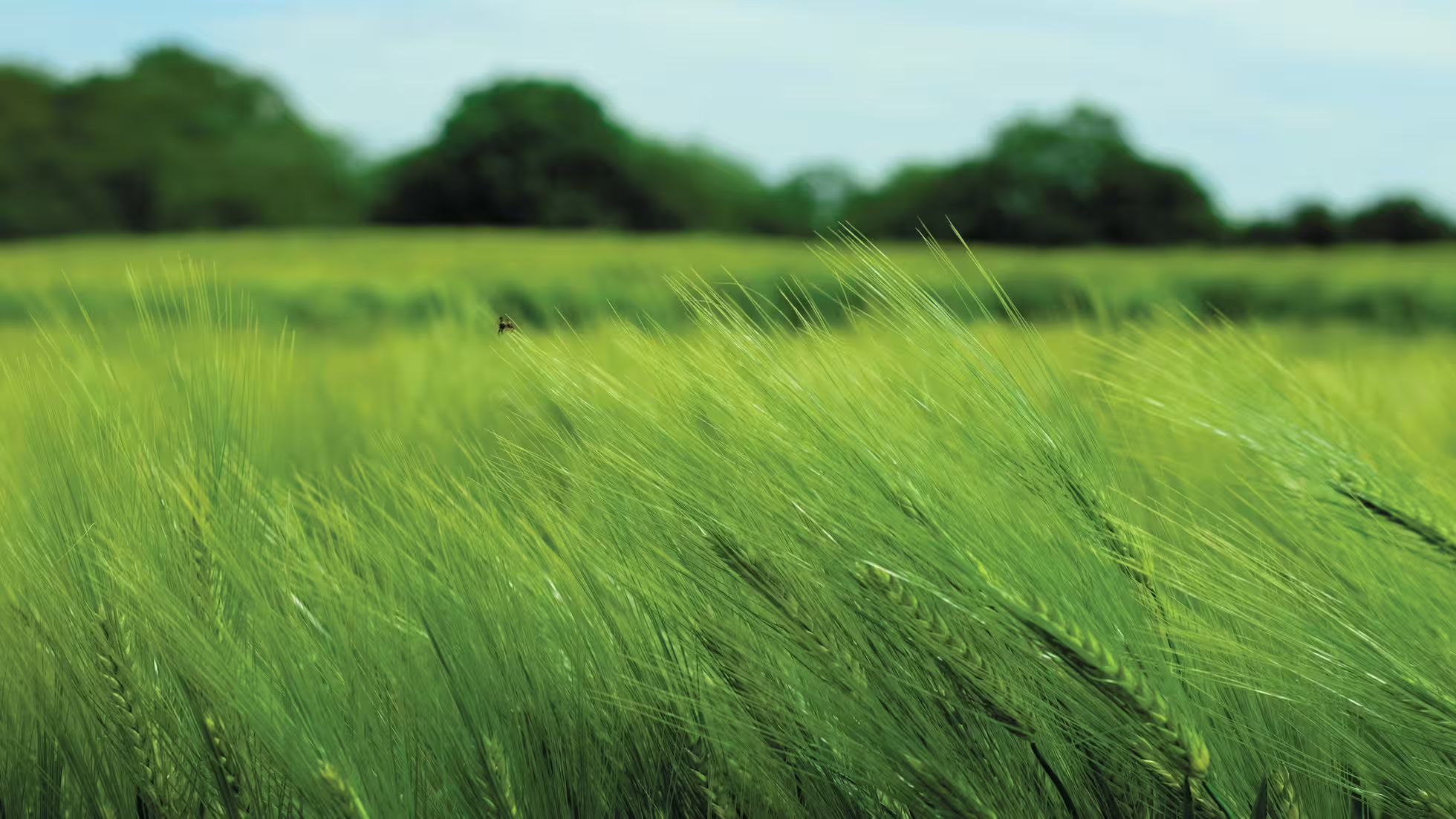
The core of safe wheat overwintering is to regulate plant vigor scientifically, manage water and fertilizer rationally, and strengthen the integrated control of diseases, pests, and weeds. The goal is to control excessive growth, enhance drought and frost resistance, and ultimately ensure stable and higher yields. The following points provide practical guidance for production management in different regions.
I. Suppress Overgrowth and Build Sturdy Seedlings
1. Proper Mechanical Rolling
For fields sown early with high seed rates, persistently warm winters can push growth ahead of schedule and increase freeze risk. When the soil surface is not fully frozen, follow “press dry not wet, soft not hard, light not heavy,” and adjust rolling strength by stand vigor and soil moisture. Increase pressure appropriately in visibly over‑vigorous fields to curb above‑ground tillers and promote deeper roots; reduce or avoid rolling on wet soils or weak stands to prevent injury and compaction.
2. Timely Chemical Regulation
In large, over‑vigorous populations, apply foliar growth regulators once the mean temperature is steadily above 8°C to slow shoot growth. Ensure even spray and proper concentration, and avoid overlaps that cause phytotoxicity. Do not use inhibitory regulators on “false‑vigorous” stands with long leaves but weak individuals, or on nutrient‑deficient fields; instead, apply foliar nutrients such as KH₂PO₄ to stimulate root development and stress tolerance.
3. Inter‑row Hoeing at the Right Time
When plants are older and the population is overly dense, hoe 5–7 cm deep between rows to cut some roots, thus reducing excessive nutrient uptake by shoots, lowering ineffective tillers, and forming well‑rooted, sturdy seedlings.
II. Water–Fertilizer Regulation to Support Robust Stands
1. Smart Water and Fertilizer to Improve Stand Status
Irrigate and fertilize precisely according to soil moisture and crop status. If soil moisture is insufficient and drought stress appears, irrigate in time and add a suitable dose of quick‑acting fertilizer to maintain vigor. If moisture is adequate and growth is normal, avoid extra irrigation/fertilization to prevent overgrowth. For small, weak populations, use rainfall windows or favorable moisture to top‑dress quick N and turn stands around, improving overwintering tolerance.
2. Secure Root Zone and Boost Stress Resistance
Where heavy straw is returned, soil may be loose or with voids; irrigate appropriately and firm the surface to help roots establish before winter. In rice‑stubble wheat, establish and clean the internal/external “three‑ditch” system (bed, perimeter, and cross ditches) to keep drainage smooth, prevent waterlogging, and enable later furrow irrigation when needed.
III. Scientific Winter Irrigation for Drought/Frost Protection
1. Choose the Right Timing
Winter irrigation replenishes soil water, promotes rooting and tillering, and buffers sudden temperature drops. Avoid irrigating too early (excess evaporation) or too late (frozen soil and poor infiltration). When relative soil water is below about 70%, irrigate around a daily mean of ~3°C with thaw by day and freeze by night to ensure effective infiltration. For already vigorous fields with adequate moisture, delay or skip winter irrigation to avoid renewed overgrowth or freeze injury from standing water.
2. Optimize Methods
Prefer efficient methods such as portable hose, micro‑irrigation, or sprinklers. Control volume to within about 40 m³ per mu. Shallow‑hoe afterwards to improve aeration and reduce compaction. For very weak, late‑sown sparse stands that cannot withstand the cooling from irrigation, skip irrigation; if tiller numbers are far below target, apply a small supplemental irrigation to stimulate compensatory tillering.
IV. Integrated Control of Diseases, Pests, and Weeds
1. Disease Monitoring and Early Control
Stripe rust hotspots include the Northwest inoculum area and the Southwest overwintering zone. Follow “scout with chemicals, spot a point, control a patch” to quickly contain focal outbreaks. Sheath blight can spread rapidly under suitable temperature and humidity; treat early to prevent pathogen buildup before and during overwintering.
2. Pest Monitoring and Integrated Measures
Soil pests, wheat mites, and aphids are key threats before and during overwintering. Strengthen field scouting and forecasting. Once thresholds are reached, combine biological control, physical/behavioral traps, and precise spraying to avoid population surges.
3. Weed Control in Wheat Fields
Select herbicides by weed flora, species composition, and temperature. Prefer continuous sunny periods with mean temperature above 5°C and without frost or rainfall when spraying. Operate carefully to avoid freeze or chemical injury.
Published at: Feb 18, 2025 · Modified at: Feb 6, 2026