
Lotus Root Water-Level and Pest Monitoring Guide for the Plum-Rain Season
Lotus Root Water-Level and Pest Monitoring Guide for the Plum-Rain Season Mid-June is a fast-growth stage for lotus root fields around Hangzhou and across the Yangtze Delta. This guide focuses on water level, split fertilization, runner adjustment, disease scouting, and digital monitoring. Topics: AgTech, Planting, Smart Agriculture, Solutions.
By mid-June, lotus root fields in Hangzhou and across the Yangtze Delta are pushing more erect leaves and starting strong rhizome expansion. Three risks matter most now: stagnant water after repeated rain, nitrogen-heavy feeding that drives leaf growth too hard, and delayed cleanup after disease or insect pressure appears. Field work needs to connect water control, feeding, runner adjustment, and scouting into one sequence.
1. Stabilize water depth and keep the drains open first
Hubei technical guidance recommends shallow water early, deeper water in the middle stage, and shallow water again later. In the current rapid-growth window, lotus fields can generally hold 10 to 20 cm of water, but during the plum-rain season the first job is checking perimeter ditches, cross drains, and low spots so water can move instead of sitting over the root zone. After rain, release muddy stagnant water first and then restore clean flowing water.
2. Split fertilizer at the erect-leaf and canopy-closure stages
Hubei guidance recommends the first topdressing at about three erect leaves with 10 to 12 kg urea per mu, then a second topdressing near canopy closure with 12 to 15 kg urea plus 7 to 10 kg potassium chloride per mu. Guangxi guidance also notes that vigorous fields can reference 20 kg compound fertilizer plus 10 kg urea per mu during fast growth. Around Hangzhou, do not dump all nitrogen at once. Check leaf color, water level, and plant vigor first, then feed in batches through simple fertigation or pump delivery.
3. Redirect runners and thin crowded spots while growth is fast
Runner growth accelerates in June. If runners push into the bund or crowd one side of the field, later rhizomes tend to become bent, thin, and unevenly distributed. During patrols, gently guide misplaced runners back toward open space and ease congested leaf clusters to preserve airflow. This small job reduces border loss and improves later harvest uniformity.
4. Scout for rot and leaf spot before deciding on control
Zhejiang and Shanghai guidance both treat lotus rot, leaf spot, aphids, and leaf-feeding caterpillars as key problems. After rain, check curled leaves, yellowing plants, sudden wilt, and diseased debris first, then inspect leaf undersides and tender new leaves for insects. Remove rotted leaves, infected residue, and weeds before deciding whether a registered targeted treatment is necessary.
5. Put water level, EC, weather, and leaf images on the phone
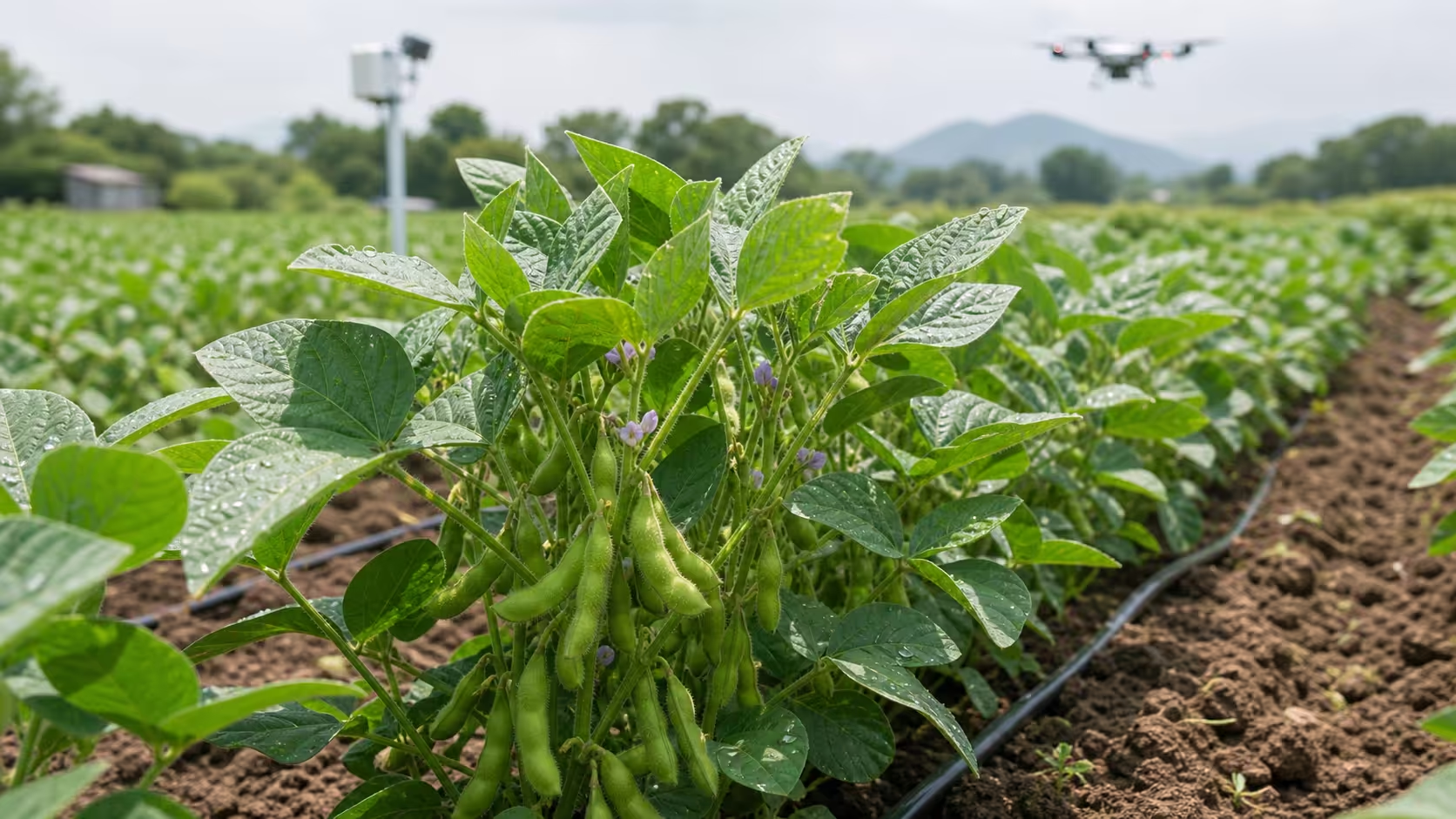
Lotus-field digitization works best when it starts with four data groups: field water level, temperature and rainfall, fertilizer batches, and leaf images. A simple water-level sensor, a small weather station, and edge cameras let managers judge drainage windows, feeding timing, and lesion spread much faster. Cooperatives should also log water adjustments, fertilizer batches, and patrol photos in the same record system.
6. Follow the sequence: drain, reset water, feed in splits, then scout
Do the jobs in order: clear drains and remove muddy stagnant water first, reset the growth-stage water depth next, apply fertilizer in splits according to erect-leaf and canopy progress, and then complete scouting plus digital records. When root stress is reduced and nitrogen-potassium timing is kept steady, lotus fields come through the rainy season with more uniform rhizomes and better harvest efficiency.