Plum-Rain Season Greenhouse Tomato Flower-Setting Priorities and Smart Pest Monitoring
Plum-Rain Season Greenhouse Tomato Flower-Setting Priorities and Smart Pest Monitoring In mid-June, greenhouse tomatoes in Hangzhou and the Yangtze region are in flower-to-fruit transition. This guide focuses on humidity control, split water-fertilizer scheduling, disease scouting, and data-linked early warning. Topics: AgTech, Planting, Smart Agriculture, Solutions.
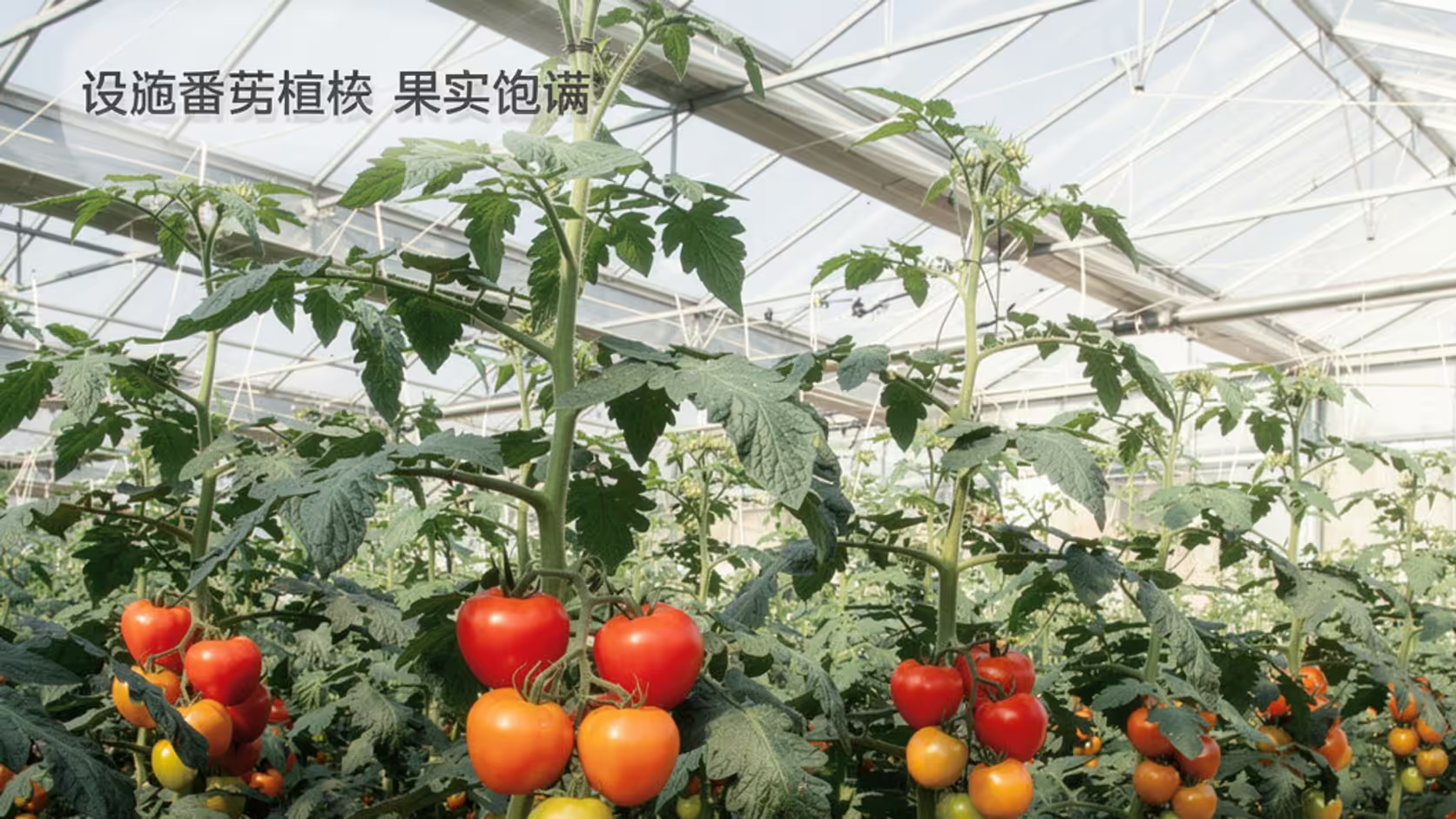
In mid-June, greenhouse tomatoes in Hangzhou and the Yangtze region enter a shift stage from stable flowering to fruit expansion. The main risks now are high humidity inside sheds, mismatched timing of fertilizer and irrigation, and late pest monitoring. Management is most stable when ventilation, water-fertilizer operations, and warning flow are connected in one loop.
1. Open ventilation and drain humidity spikes before doing heavy field operations
The agricultural guidance for vegetable greenhouses stresses controlled environment with suitable humidity and ventilation. First, check roof seals, side windows, and vent openings, then open and close in short cycles to lower long-lasting dampness. Do not keep the house in a permanently closed humid state during rainy spell shifts.
2. Split fertilizer by stage, avoid excess nitrogen, and keep potassium stronger after fruit set
MOA facility tomato recommendations state that fertilizer should be split and mainly applied with water, with less concentrated topdressing. For the current stage, follow a sequence of nursery base, early flowering, early fruiting, and fruit expansion with small frequent doses. If vigor is weak, add quick nitrogen only where needed. Keep the key order: use balanced nutrition before flowering, then increase calcium and potassium support during rapid fruit growth.
3. Use frequent small irrigation, avoid long flooding in rainy periods
Greenhouse tomatoes react poorly to long-standing root-zone oxygen shortage. Use light, repeated irrigation events rather than one large watering. Keep substrate moist but not saturated. After rain, remove standing water first, then restore target moisture in the root zone by short and controlled application. When drip irrigation is installed, bind fertigation and irrigation in one cycle.
4. Monitor gray mold and key pests by threshold, then respond in layers
The Jilin smart-control scheme for facility tomato uses yellow boards, blue boards, and lures as baseline monitoring. For gray mold, local guidance recommends opening vents to lower humidity and removing diseased flowers and fruits quickly. During high-risk periods, monitor gray mold, tomato leafminer, whitefly, and thrips together with leaf and fruit symptoms. Keep to low-to-moderate interventions first, then rotate registered controls only after thresholds are reached.
5. Connect sensors, fertigation, and scouting photos in one digital ledger
Field memory is hard to standardize without records. Build one shared daily ledger for moisture point, inside humidity, fertigation batch, photos, and pest index. Add simple labels: sensor ID, time, leaf condition, and symptom type. Link humidity sensor, drip controller, fertigation unit, and phone or drone photos to one timeline. This shortens response time when disease pressure rises.
6. Daily execution order and risk checkpoints for the plum-rain window
Keep the sequence stable: ventilate and release humidity, split feed and irrigation by stage, then complete monitoring and warning tasks before sunset. In continuous rain, prioritize ventilation and drainage, and use precision and localized control instead of full-field spraying. Confirm three control points at end of day: humidity at critical points back in target range, watering/fertilization intervals within planned window, and no rise in insect counts without treatment notes. This sequence improves fruit set continuity and reduces harvest variability.