Single-Season Rice Transplant Recovery and Tillering Guide for the Plum-Rain Period
Single-Season Rice Transplant Recovery and Tillering Guide for the Plum-Rain Period Around June 12, 2026, single-season rice in Hangzhou and across the Yangtze Delta is entering the key window for transplant recovery and early tillering. This guide focuses on shallow water, split fertilization, sheath blight and planthopper scouting, and field data logging. Topics: AgTech, Planting, Smart Agriculture, Solutions.
Around June 12, many single-season rice fields in Hangzhou and across the Yangtze Delta are moving through the short but critical window between mechanical transplanting, recovery, and early tillering. Three risks matter most now: blocked drains that leave roots short of oxygen after rain, over-fast topdressing that pushes weak floating growth, and delayed scouting that lets sheath blight or planthoppers spread. Field work needs to follow one sequence instead of scattered decisions.
1. Hold shallow water first and clear muddy water quickly after rain
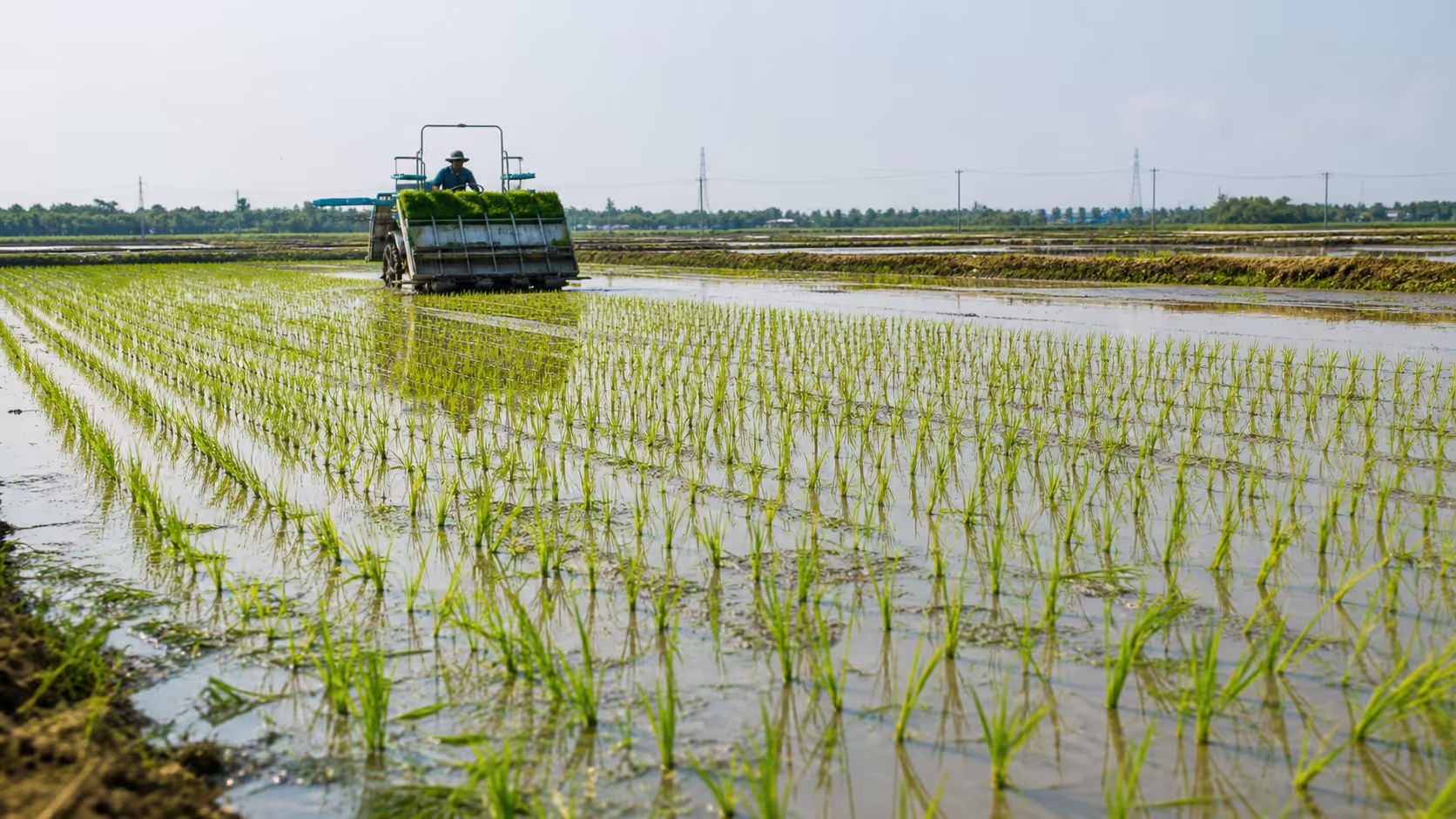
The Ministry of Agriculture and Rural Affairs issued a southern rice heavy-rain response notice on May 22, 2026 that stresses keeping newly transplanted paddies in a shallow water layer and clearing drainage channels before storms. For current machine-transplanted fields, 1 to 3 cm of shallow water is the safest range for recovery. After repeated rain, release muddy stagnant water first, then restore shallow clean water. Do not leave deep standing water over the root zone.
2. Topdress by seedling condition 5 to 7 days after recovery starts
An official rice water and fertilizer management guide published in January 2026 notes that tillering fertilizer is best applied within 7 to 10 days after transplanting, with quick nitrogen plus potassium to support early tiller formation. In current Yangtze Delta fields, pale seedlings and slow tillering can receive an early quick-acting nitrogen feed, while dark-green fields with enough base seedlings should wait to avoid too many ineffective tillers. Keep a shallow water layer during fertilization and avoid heavy feeding just before another rain.
3. Check missing hills, floating seedlings, and row uniformity in machine-transplanted fields
During the rainy season, local missing hills and lodged seedlings are easy to overlook. Patrols should first inspect whether transplant rows stay continuous, then look at field corners, inlets, and low spots for floating clumps, gaps, or crowded patches. Replant missing spots within the next clear weather window whenever possible. Zhejiang machine-transplant side-deep fertilization guidance also stresses stable plant population, short seedling age, and root-focused recovery, which matches the current field priority.
4. Watch sheath blight and planthoppers first, then decide on treatment
National June agrometeorological guidance and Zhejiang rice technical materials both warn that wet, humid conditions in Jiangnan raise the early risk of sheath blight, rice planthoppers, and leafrollers. Start by checking lower leaf sheaths near the waterline, dense canopy zones, and grassy field edges, then inspect leaf undersides and central leaves for insects. If drainage improvement, lower humidity, light trapping, and sticky-board monitoring can reduce pressure first, do that before whole-field spraying. Use registered products only after thresholds are reached.
5. Put water depth, seedling condition, fertilizer batches, and pest images into one field log
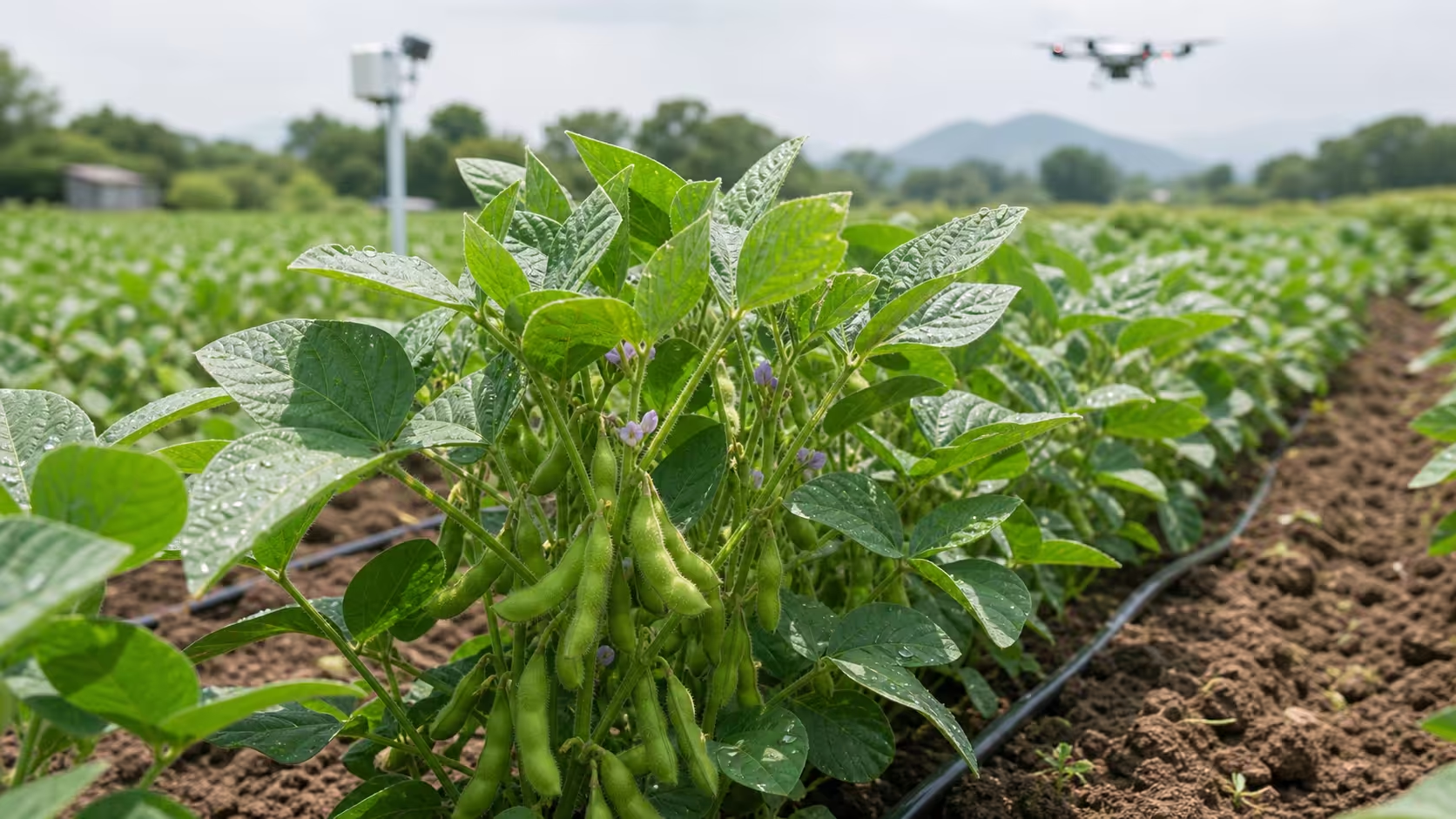
For rice digitization, four data groups are immediately practical: water depth, seedling photos, fertilizer records, and pest observations. A simple water gauge or sensor, local rainfall data, and mobile logging of each fertilizer batch and problem patch help managers decide when to drain, when to feed, and which plots need plant protection first. Larger operators can add smart insect traps, machine-transplant tracks, and UAV scouting photos for better review later.
6. Keep the sequence clear: stabilize water, inspect seedlings, promote tillers, control disease and insects
Do the work in order. Stabilize shallow water and drainage first, inspect missing hills and recovery speed next, apply split fertilizer according to seedling color and vigor, and finish with scouting plus digital records. When roots establish well in the recovery stage, the crop enters tillering with a more even stand and a stronger base for later drying, stem elongation, and panicle number formation.
Sources
- Ministry of Agriculture and Rural Affairs: Technical guidance for southern rice under heavy rainfall
- China Agriculture Information Network: June 2026 agrometeorological analysis and farm guidance
- China Agriculture Information Network: Water and fertilizer management for high-yield, high-quality rice
- Zhejiang technical material: side-deep fertilization and recovery-stage tillering management for machine-transplanted rice