Green IPM for Tomato Leafminer (Tuta absoluta): Key Measures
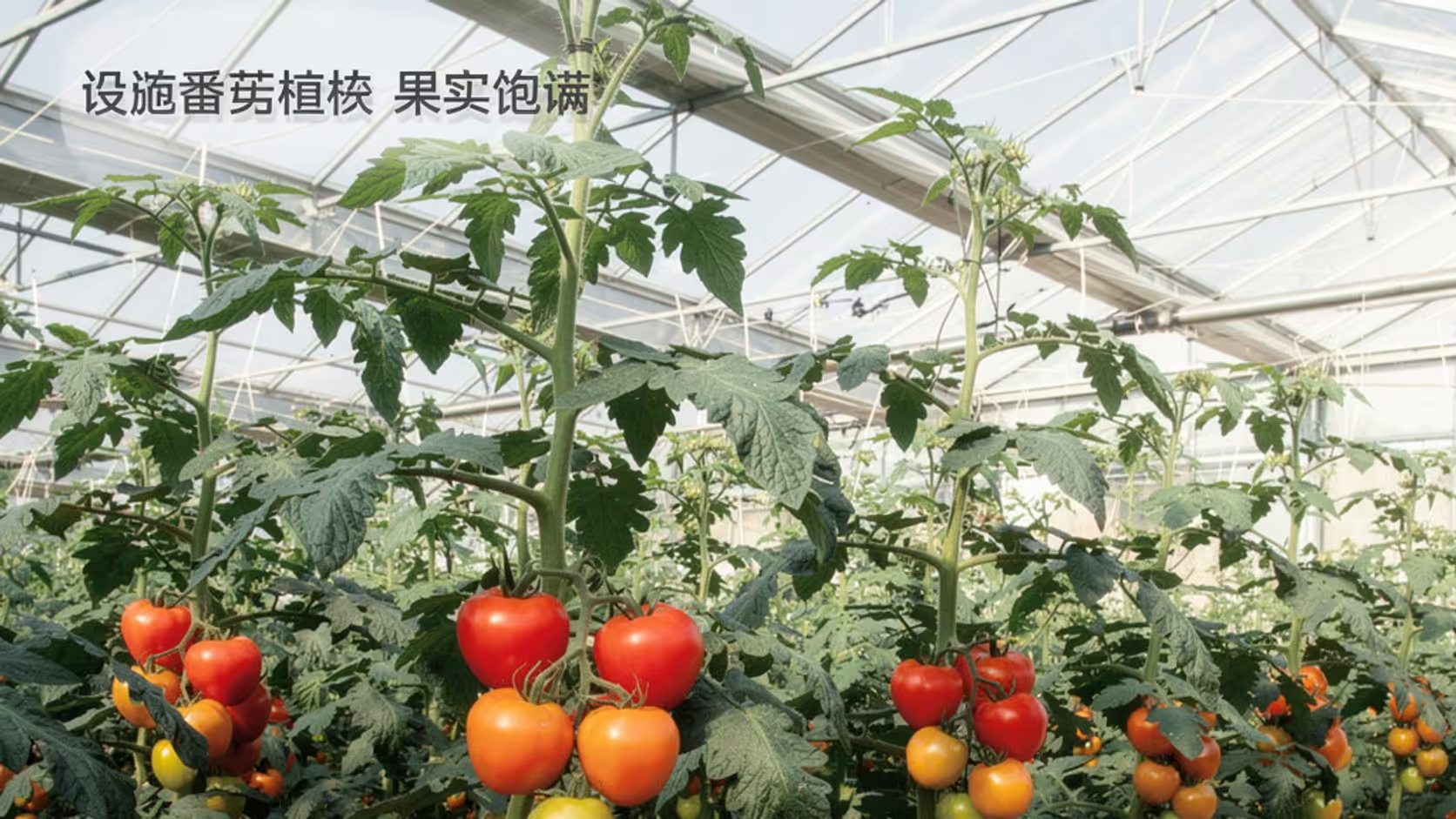
Green IPM for Tomato Leafminer (Tuta absoluta): Key Measures Tuta absoluta is a major pest of tomato and also threatens other Solanaceae. In 2025, nationwide pressure is forecast as moderate overall, with local hotspots possibly severe; damage is greater in protected cultivation than open field, and fall crops suffer more than spring, especially from flowering to fruit maturity. This guide outlines green, integrated control to safeguard yield and quality. Topics: AgTech, Planting.
Tuta absoluta is a key pest in tomato production and also threatens eggplant, potato, pepino and tobacco. For 2025, overall occurrence is expected to be moderate nationwide, with some regions reaching heavy levels. Under protected cultivation, damage exceeds that in open fields; fall crops are more affected than spring. The peak risk is from flowering to fruit maturity. Effective measures are needed to ensure safe, high‑quality production.
I. Control Targets
-
90% coverage of measures in major tomato areas.
-
80% control efficacy.
- Economic loss ≤10%.
II. Strategy
Follow “source control, zonal management, green prevention.” Strengthen monitoring and early warning; prioritize agricultural, physical and biological controls; when necessary, use low‑toxicity, low‑residue pesticides scientifically to enhance green IPM effectiveness.
III. Priority Regions
Focus on Xinjiang, Yunnan, Guizhou, Sichuan, Chongqing, Hunan, Guangxi, Shaanxi, Inner Mongolia, Liaoning, Gansu, Ningxia, Qinghai, Shanxi, Hebei, Shandong, Tianjin and Beijing; continue surveillance in yet‑unaffected regions to detect and block spread early.
IV. Technical Measures
1) Monitoring
Target tomato primarily, but also eggplant, potato, pepino, tobacco and goji; use black nightshade (Solanum nigrum) as an indicator.
- Nursery: from sowing to emergence; Field: from transplanting to crop termination.
- Open field: 3 sticky pheromone traps per field; at seedling stage, triangular layout at ~50 m spacing, ≥5 m from borders; at adult stage, linear on ridges at 50 m spacing, ~1 m from edges.
- Protected: 2 traps per house (entrance and middle at seedling stage; near aisles at adult stage), ≥1 m from sidewalls.
- Trap height 10–20 cm; record captures every 3 days; replace sticky cards promptly and lures every 30 days; smart monitoring devices encouraged.
2) Controls
Agronomic
- Rotations with non‑solanaceous crops, or rice paddy–upland rotations.
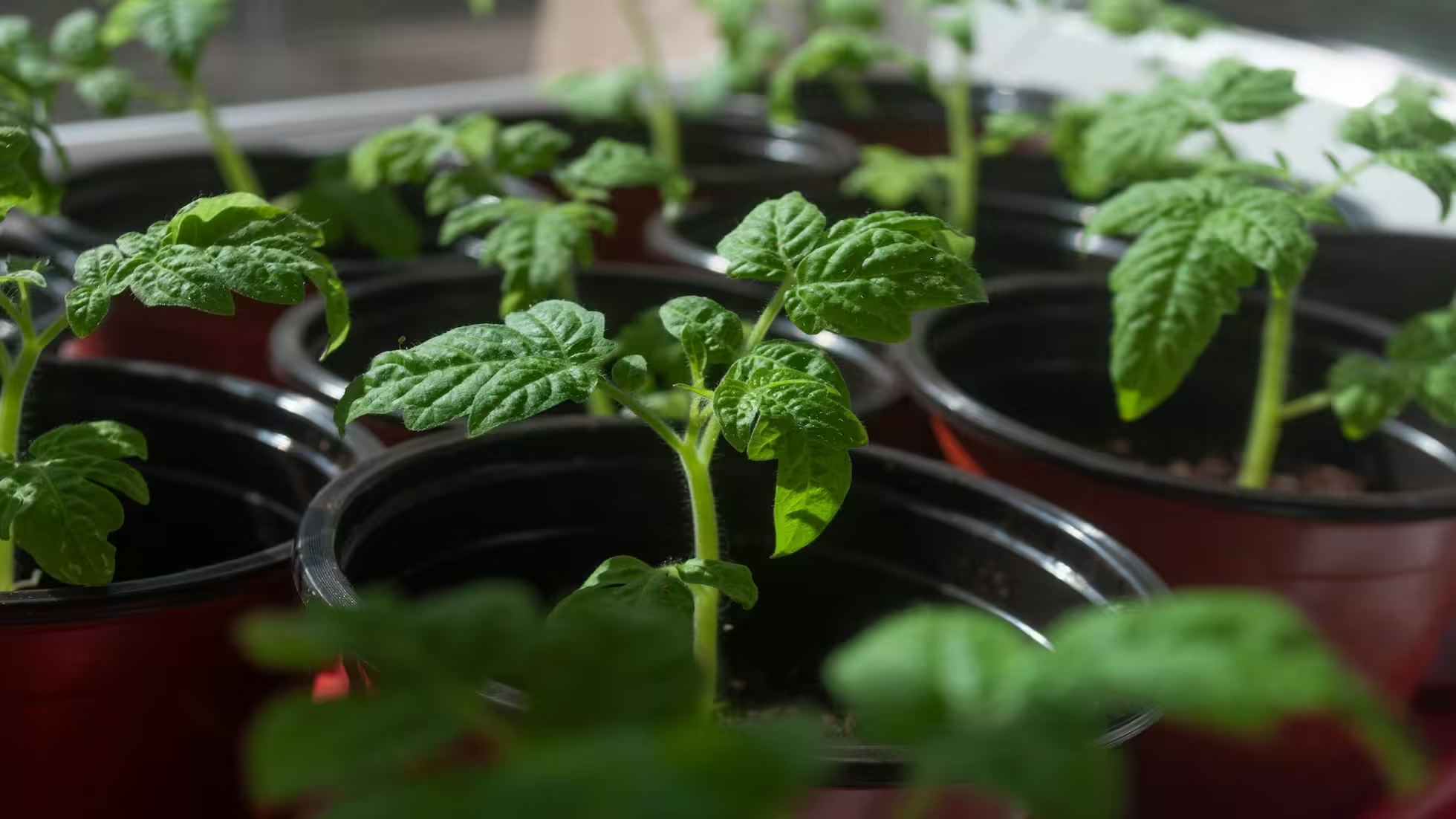
- Pest‑free seedlings only; avoid imports from infested areas; raise seedlings inside insect‑proof nurseries.
- Field sanitation: eliminate weeds and solanaceous residues; quickly destroy prunings/thinnings; before crop removal, spray then remove residues and cover for solar fermentation.
- Environment: winter deep‑chilling (≥30 days) or summer high‑temperature solarization to reduce populations.
Physical
- 60‑mesh insect nets on doors/vents of structures.
- Light traps during peaks: open field 1 lamp per 5–10 mu; protected 1 per house; height 0.5–1 m; add 0.2% detergent to water pans.
Pheromone techniques
- Mating disruption: before transplanting, deploy twist ties/tubes (~60 per mu) or smart aerosol dispensers (1 set per 3–5 mu); best as large contiguous blocks (denser at perimeter).
- Mass trapping: open field 8–10 triangle/wing traps per mu at 10–20 cm; in protected houses, combine with blue sticky cards, colored pans or bucket traps at ground level.
Biological
- Ecological support: plant nectar sources (calendula, sesame, buckwheat) along fields/ditches to conserve natural enemies; reduce broad‑spectrum insecticides.
- Releases: when adults are detected, release Trichogramma (T. pretiosum/dendrolimi), Orius spp. and Nesidiocoris tenuis where appropriate.
Chemical (last resort)
Spray 5–8 days after adult counts surge (3–5× day‑over‑day) or at first larval mines. Spray in late afternoon on rain‑free days; ensure thorough coverage, especially leaf undersides. Prefer bio‑pesticides such as Bt G033A, Beauveria bassiana, and spinetoram. Where registered and validated, use efficient, low‑toxicity chemicals with rotation and PHI compliance: abamectin, emamectin benzoate, chlorantraniliprole, broflanilide, rotenone, etc.