Blueberry Orchard Soil Moisture Monitoring and Drip Irrigation Management
Blueberry Orchard Soil Moisture Monitoring and Drip Irrigation Management Practical guidance for blueberry orchards on soil pH 4.0-5.5, substrate moisture 60%-70%, daily irrigation of 0.5-1.5 L per plant, acidified fertigation, pest scouting, and sensor-linked drip control. Topics: AgTech, Planting, Smart Agriculture.
Blueberry Orchard Soil Moisture Monitoring and Drip Irrigation Management
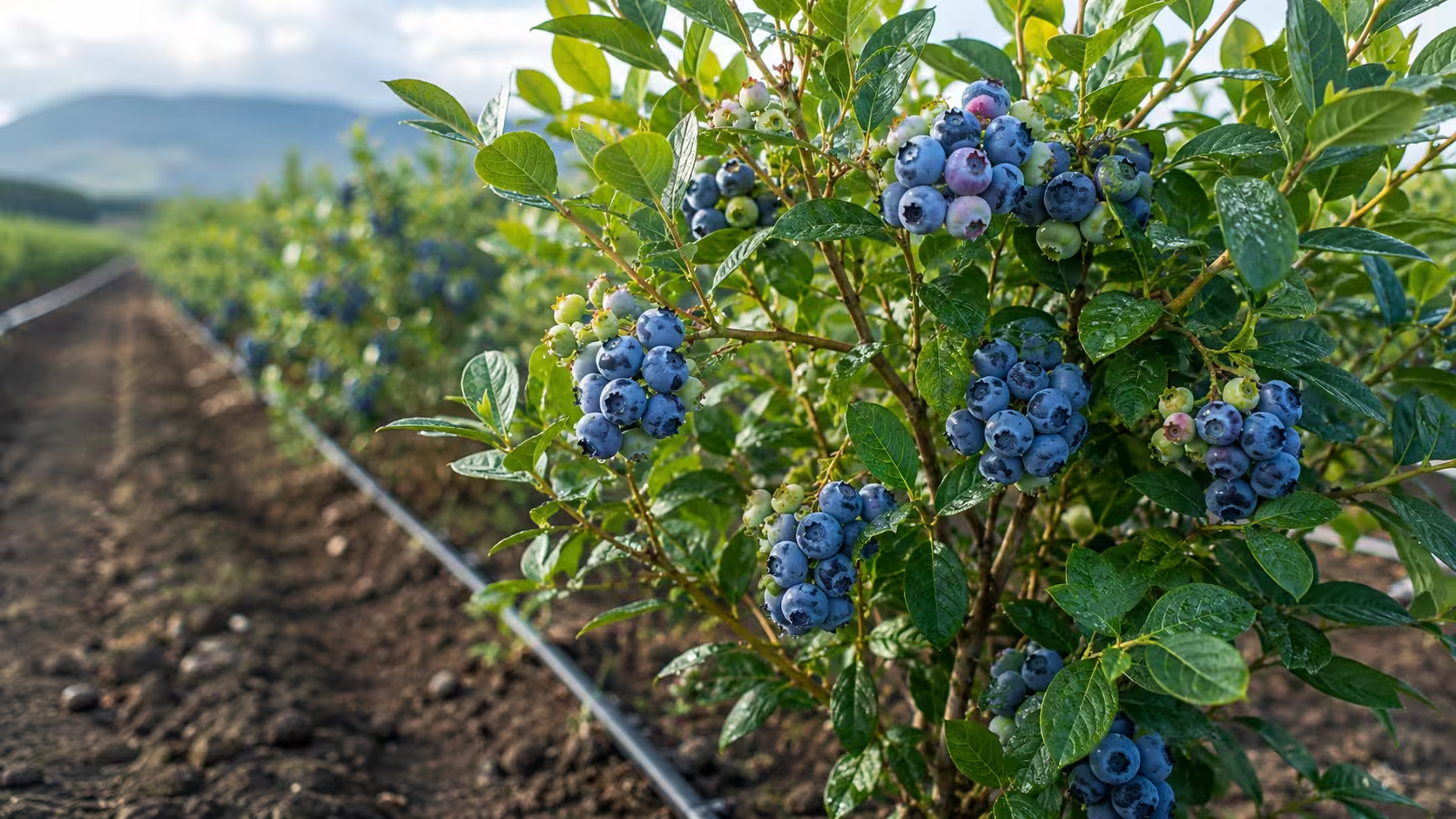
Blueberry roots are shallow and have no root hairs, so the crop is sensitive to both drought and waterlogging. Poor water management quickly causes chlorosis, fruit drop, and weak roots. In the current fruit expansion and hot-season period, growers should manage soil moisture, drip frequency, pH adjustment, and pest scouting as one coordinated task.
1. Stabilize soil and substrate first
Authoritative technical guidance generally places suitable blueberry soil pH at 4.0-5.5, with organic matter above 5%. In field orchards, check pH and moisture before deciding on sulfur, organic matter, or acidic soluble fertilizer. In substrate systems, focus on substrate moisture and drainage output instead of judging only by a wet surface.
2. Irrigate by moisture status, not by habit
From transplanting to establishment, daily irrigation can be kept at 0.5-1.0 L per plant, split into 2-3 drip events. After bud break and leaf expansion, increase to 1.0-1.5 L and fine-tune by weather, canopy vigor, and substrate moisture. After rain, inspect root-zone moisture and drainage ditches first. If the soil is still wet, pause irrigation to avoid oxygen deficiency around the roots. During continuous heat, irrigate in smaller doses in the early morning and evening to keep the root zone moist without standing water.
3. Fertigation must protect both pH and nutrient efficiency
Blueberries perform better with small, frequent fertigation events. Use fully soluble fertilizers in the drip system and avoid directly flushing high-salt or high-chloride fertilizers. Field orchards can supplement ammonium nitrogen, potassium, and liquid organic fertilizer according to soil tests. Substrate orchards can use acidified fertigation to adjust pH at the same time. When young leaves turn yellow between veins, first check high pH and alkaline irrigation water before deciding on iron or micronutrient supplements.
4. Scout before spraying
In hot and humid periods, pay close attention to leaf spot, gray mold, anthracnose, and pests such as grubs, slug caterpillars, and stem borers. Scout at least twice a week and inspect new shoots, leaf undersides, fruit clusters, and the root zone. Start with orchard sanitation, pruning, ventilation, mulching, and trapping to reduce pressure. Then use registered products precisely for the target crop and pest, and follow the pre-harvest interval strictly.
5. Smart agriculture should focus on four data points
Blueberry orchards are well suited to soil moisture sensors, pH or EC checkpoints, compact weather stations, and solenoid valve controllers. The four core data points are root-zone moisture, irrigation duration, drainage or return flow, and orchard temperature-humidity conditions. When these data enter a phone app or management platform, drip irrigation can start and stop by threshold instead of manual guesswork. Larger orchards can add insect traps, cameras, or AI image recognition to warn first and spray later.
6. Actions for this week
Complete one orchard-wide check of soil pH and moisture, calibrate emitter flow, and clean filters and main pipes. During fruit expansion, switch to smaller and more frequent irrigation events. Recheck waterlogged spots within 24 hours after rain. Where pest pressure is rising, connect scouting records with spray batches and harvest dates. Managing water, fertilizer, crop protection, and data together will improve orchard stability.
Sources
- Heilongjiang Provincial Department of Agriculture and Rural Affairs: Technical Guidance for Spring Preparation of Cold-Region Berries
- Linyi Agriculture and Rural Affairs Bureau: Green Food Blueberry Production Technical Regulation
- Hubei Provincial Department of Agriculture and Rural Affairs: Precision Drip Irrigation in a Ten-Thousand-Mu Blueberry Base