Summer Water Bamboo Harvest and Plum-Rain Water-Fertilizer Monitoring Guide
Summer Water Bamboo Harvest and Plum-Rain Water-Fertilizer Monitoring Guide In June, Hangzhou and the Taihu plain enter the plum-rain season while double-season water bamboo moves into the summer harvest window. This guide focuses on harvest timing, water depth, topdressing, pest monitoring, and digital field records. Topics: AgTech, Planting, Smart Agriculture.
Summer Water Bamboo Harvest and Plum-Rain Water-Fertilizer Monitoring Guide
June brings the plum-rain season to Hangzhou, Jiaxing, and Huzhou, and double-season water bamboo also enters the summer harvest window. At this stage, the main risks are long periods of deep water, nitrogen-heavy topdressing after harvest, and faster disease and pest spread after rain. Harvest, shallow water management, topdressing, and field scouting need to work as one routine.
1. Harvest as soon as stems turn white and use clear weather windows
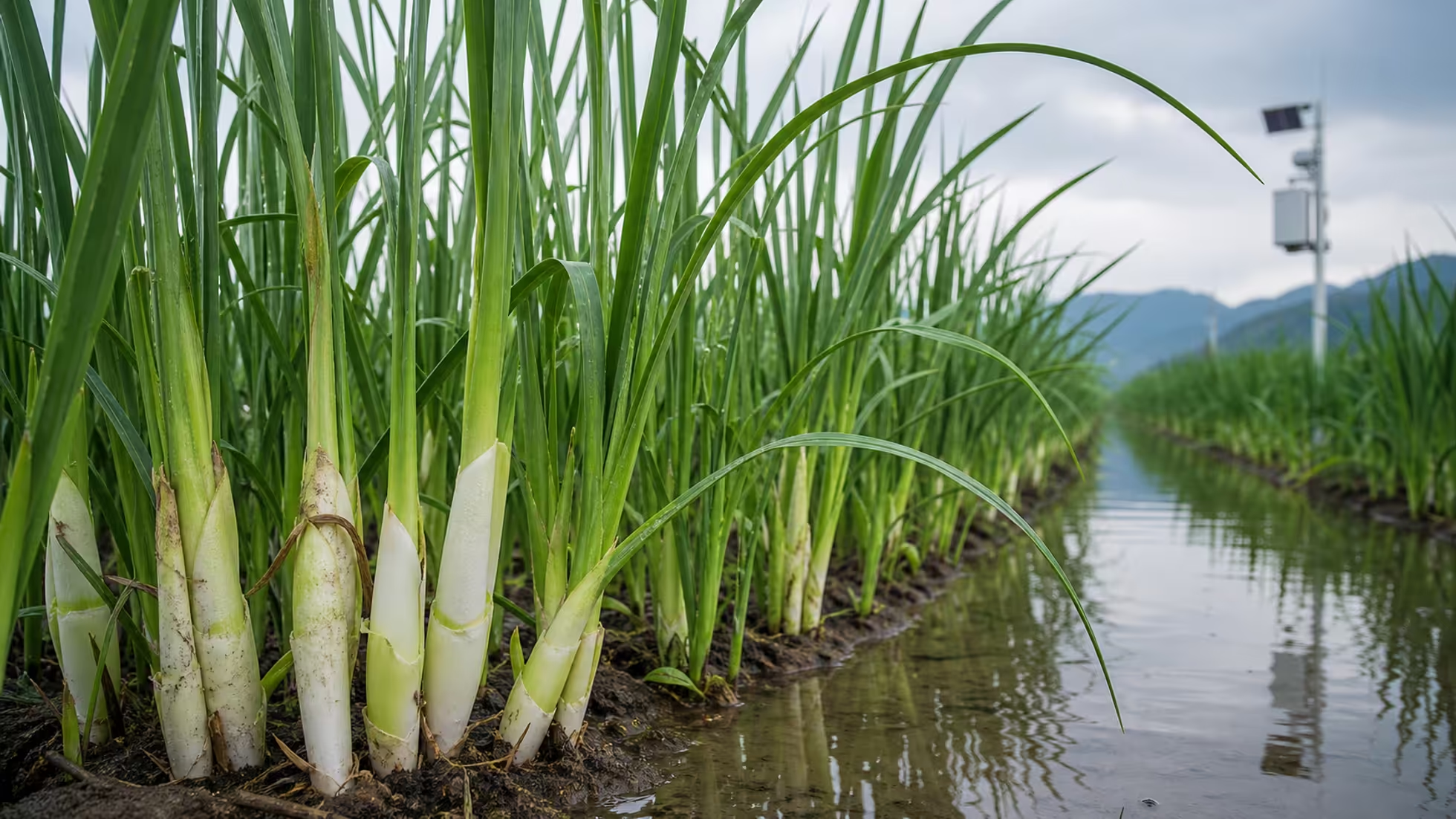
Once the edible stem shows white, market quality improves quickly, but late harvest causes fiber to increase and reduces space for the next tillers. Use weather forecasts to harvest in batches during dry periods, cut gently, and move produce the same day. After continuous rain, inspect field surfaces and drainage lines first, then organize harvest to avoid damaging rows and young tillers.
2. Keep water depth at 15 to 20 centimeters during the summer harvest stage
The recommended technical guidance for water bamboo keeps the field at shallow and stable water during summer harvest, with 15 to 20 centimeters as the practical range for recovery. During the plum-rain period, clear ditches first to stop outside water from backing up and to avoid long waterlogging. In hot and humid conditions, replace old water when needed so roots are not stressed by stagnant water.
3. Split topdressing into two rounds and prioritize potassium before heavy nitrogen
After one or two harvest rounds, double-season water bamboo enters a key recovery and tillering phase. A practical schedule is 30 to 35 kilograms per mu of potassium-sulfate compound fertilizer first, then another 20 to 30 kilograms per mu about 10 days later, with shallow water kept after fertilization. The goal is to restore growth without forcing lush leaves, field closure, or extra disease pressure from one heavy nitrogen application.
4. Scout after rain before deciding on crop protection
Plum-rain inspections should focus on stem borers, sheath diseases, and lesions around the leaf sheath area. Start with ditch cleaning, removal of old yellow leaves, and field sanitation, then check sticky traps, pheromone traps, and visible pest pressure. Where green control tools are available, use lamps, boards, nets, and organized area treatment first. If spraying is needed, choose products registered for the crop and target pest and keep the pre-harvest interval strict.
5. Smart agriculture is most useful when it tracks four data groups
Water bamboo fields do not need an oversized digital system. The most useful first layer is four data groups: field water level, rainfall and air humidity, pest monitoring counts, and harvest plus fertilization records. Water-level sensors and compact weather stations help decide drainage, water exchange, and fertilization timing. Edge cameras and pest devices are useful for post-rain checks, while cooperatives can keep harvest batches, fertilizer dates, and field photos in one shared log for quality traceability and labor planning.
6. Weekly action list
Clear inlet and outlet ditches, check water depth and low spots, harvest white stems during dry windows, and complete the first topdressing within two days after harvest. Recheck plant vigor around 10 days later and apply the second fertilizer round if needed. Within 24 hours after each rainfall event, inspect for pests and disease and remove old leaves and infected residue. When harvest, shallow water, topdressing, and monitoring all stay in rhythm, the next flush of double-season water bamboo remains more uniform.